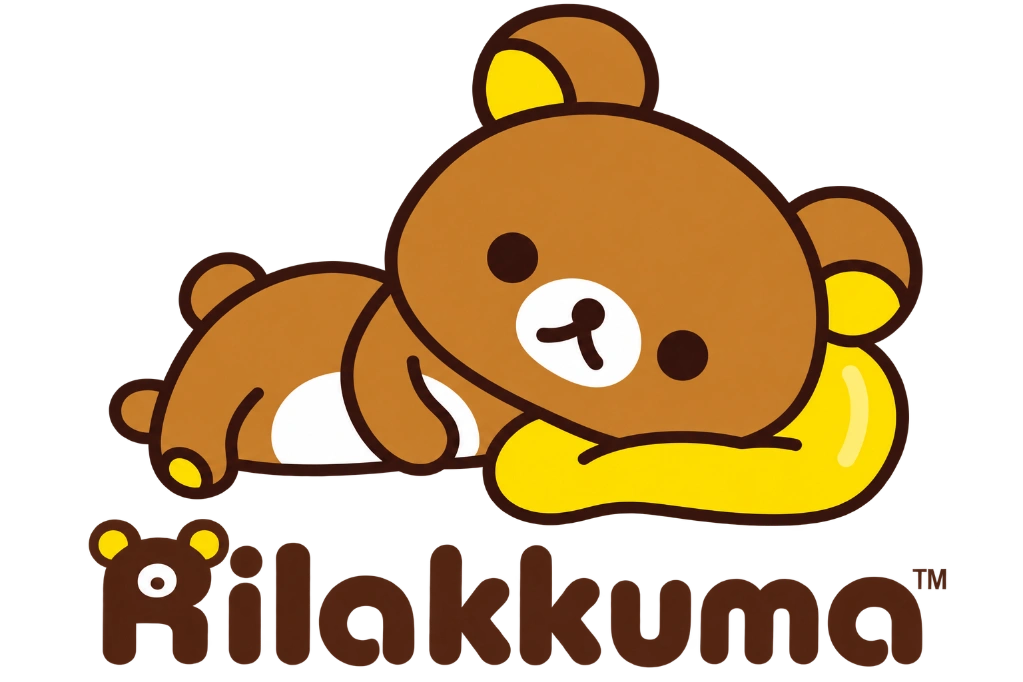

The History and Meaning of Rilakkuma: How a Relaxed Bear Became a Global Icon
Rilakkuma, the brown bear who appeared one day in office worker Kaoru’s apartment, has charmed millions since 2003. But what does the name actually mean, and why did this laid-back character resonate so deeply across cultures?
The rilakkuma meaning comes from two Japanese words: ‘rirakkusu’ (relax) and ‘kuma’ (bear). Together they form ‘Rilakkuma’ — literally ‘relaxed bear’ or ‘bear in a relaxed mood.’ Created by San-X illustrator Aki Kondo, the character embodies a gentle rebellion against Japan’s intense work culture, choosing leisure and small comforts over productivity. We’ll trace how this simple concept grew into one of the most recognizable characters in the kawaii universe.
The 2003 Debut: A Bear Who Just Showed Up
Rilakkuma first appeared in August 2003 as part of San-X’s character merchandise line. The original backstory was deliberately low-stakes: one day Kaoru, an office worker living alone, came home to find a bear in her apartment wearing a white polka-dot bag on his back.
He never explained where he came from. He simply stayed, spending his days lounging on the couch, eating dango and pancakes, watching TV, and listening to music. Kaoru accepted this surreal arrangement — the bear paid no rent, contributed nothing, and seemed perfectly content doing absolutely nothing productive.
This premise struck a chord in early-2000s Japan, where overwork and burnout were increasingly visible social issues. Karoshi, or death from overwork, had entered public discourse, and younger workers were beginning to question the salaryman ideal. Rilakkuma offered a fantasy alternative: total permission to rest.
Breaking Down the Name and Design Philosophy
The Linguistic Construction
‘Rirakkusu’ is the Japanese katakana rendering of the English word ‘relax.’ Combined with ‘kuma,’ the everyday word for bear, the name becomes a mission statement. Every design choice reinforces this: Rilakkuma’s half-closed eyes, his soft round body, the perpetual slight smile.
The white bear suit he wears (revealed to have a zipper in later story expansions) adds another layer — even his ‘bear-ness’ is a costume he can take off, a meta-joke about performance and authenticity. Korilakkuma, the smaller white companion who appeared later, wears a red button and embodies playful mischief where Rilakkuma represents serene inertia.
Contrast with Traditional Cute Characters
Most kawaii characters are energetic, helpful, or aspirational. Hello Kitty is industrious and social; Doraemon solves problems with gadgets; Pikachu battles and competes. Rilakkuma does none of these things. He is cute *because* he refuses effort, making him the rare character whose appeal is rooted in passive resistance rather than achievement.
Cultural Resonance and the Appeal of Doing Nothing
Rilakkuma’s popularity exploded in the mid-2000s just as ‘yutori’ (relaxed) education reforms and debates about work-life balance entered mainstream Japanese conversation. The character gave form to an unspoken desire: permission to stop trying so hard.
Internationally, the same themes resonated. In South Korea, Taiwan, and eventually Western markets, Rilakkuma merchandise became shorthand for self-care and burnout recovery. The character’s core cast and their dynamics offered narratives about different ways of being — Kiiroitori, the responsible bird, constantly nags Rilakkuma to contribute, creating a comedic tension between duty and leisure that fans recognize from their own lives.
The 2019 Netflix stop-motion series *Rilakkuma and Kaoru* deepened this reading, showing Kaoru navigating career stagnation, relationship anxiety, and existential drift while Rilakkuma simply *exists*, offering no solutions but somehow making the apartment feel less empty. That wordless companionship became the character’s real gift.

Evolution Through Collaborations and Collections
San-X has released hundreds of themed Rilakkuma collections since 2003 — seasonal sets, food collaborations, travel series, anniversary editions. Each maintains the core personality while exploring new settings: Rilakkuma as a baker, a camper, a hot spring visitor, always relaxed regardless of context.
These variations sustain collector interest while reinforcing the brand’s flexibility. A character defined by inaction can appear anywhere, doing anything (or nothing), without violating expectations. The different character presentations across series show how the same low-key energy adapts to countless scenarios without losing coherence.

From Stationery to Plush: The Merchandise Empire
Rilakkuma merchandise spans every conceivable category: stationery, home goods, fashion, café collaborations, pop-up stores. The most iconic format remains the plush toy — soft, huggable, designed for exactly the kind of idle physical comfort the character represents.
San-X’s licensing strategy has kept quality high even at mass-market scale. Official items maintain careful attention to the character’s proportions, color palette (that specific warm brown, the precise off-white of the chest patch), and expression. Collectors distinguish authentic pieces from knockoffs by checking these details plus the official San-X tags and packaging.
Why a Lazy Bear Still Matters
Two decades after his debut, Rilakkuma remains culturally relevant not despite his passivity, but because of it. In an era of productivity optimization, hustle culture, and the pressure to monetize every hobby, a character who simply *exists* — no goals, no hustle, no self-improvement arc — feels increasingly radical.
The rilakkuma meaning hasn’t changed since 2003: permission to rest, unearned and unapologetic. What has changed is how urgently people seem to need that permission. Whether through a plush companion on a desk or a phone wallpaper during a stressful commute, Rilakkuma offers the same quiet refusal his creator imagined twenty years ago: the right to do nothing, and to feel fine about it.
Notes
Rilakkuma combines ‘rirakkusu’ (the Japanese pronunciation of ‘relax’) with ‘kuma’ (bear). The name translates to ‘relaxed bear’ or ‘bear in a relaxed mood,’ directly describing the character’s defining trait: a bear who does nothing but rest and enjoy small comforts.
The original 2003 design showed Rilakkuma wearing a white polka-dot bag with a zipper on his back, hinting at a costume. Later San-X materials confirmed he’s wearing a full bear suit and is actually something else underneath, though the ‘real’ identity is never fully revealed. This ambiguity adds to the character’s whimsical, low-stakes mystery.
Rilakkuma debuted in 2003 during growing public awareness of overwork culture and burnout in Japan. The character’s unapologetic laziness and refusal to be productive offered a gentle fantasy of opting out — something socially difficult to express directly. His popularity reflected a desire for permission to rest without guilt.
The main cast includes Korilakkuma, a smaller mischievous white bear who also appeared in Kaoru’s apartment; Kiiroitori, a small yellow bird who lived there first and constantly scolds Rilakkuma for being lazy; and Kaoru, the human office worker whose apartment they all share. Later series introduced Chairoikoguma, a honey-colored bear cub from the forest.
Most cute characters are active, helpful, or aspirational — they solve problems, go on adventures, or demonstrate skills. Rilakkuma’s entire personality is passive contentment and low-effort living. His appeal is not what he does, but what he refuses to do, making him rare among mascot characters.
San-X licenses Rilakkuma merchandise globally through official retailers, specialty import stores, and collaborations. Official items carry San-X branding, holographic tags, and precise color/proportion accuracy. Pop-up stores and themed cafés appear seasonally in major cities, and the San-X online store ships internationally for many product lines.